On this page · 5 sections
- What Exactly Is an ICP (And Why Should You Care)?
- Step 1: Get Crystal Clear on the Problem You're Solving
- Step 2: Mine Your Early Conversations for Gold
- Step 3: Sketch Out Who They Are (On Paper)
- Step 4: Get Inside Their Head
- Step 5: Figure Out Who's NOT Your Customer
- Step 6: Get Out and Actually Talk to People
- Step 7: Watch for the Hell Yes Moments
- Step 8: Write It All Down (Seriously)
- Step 9: Go Where Your People Actually Are
- Step 10: Stay Flexible and Keep Learning
- Mistakes That'll Slow You Down
- Actually Using Your ICP (This Is Where the Magic Happens)
- The Real Talk: This Takes Time
- Need Help Finding Your Ideal Customers?
Let's be honest getting your first 100 users is tough. Really tough.
You've built something you believe in, but now you're staring at the hardest question every founder faces: Who exactly am I building this for?
If you're feeling a bit lost right now, you're not alone. Most startups struggle with this. The ones that figure it out early? They're the ones who gain traction while others are still spinning their wheels.
That's where your Ideal Customer Profile comes in. And no, it's not just another startup buzzword. It's the difference between talking to everyone and connecting with the right people.
What Exactly Is an ICP (And Why Should You Care)?
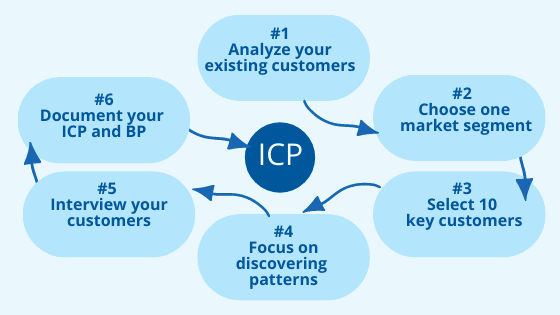
Think of your Ideal Customer Profile as a detailed sketch of the person who will absolutely love what you're building. Not just like it love it enough to use it, pay for it, and tell their friends about it.
Here's the thing: when you're chasing your first 100 users, you don't have unlimited time, money, or energy. You need to be laser-focused. Your ICP is basically your filter. It helps you say yes to the right opportunities and no to everything else.
Without it? You're essentially trying to sell ice to everyone people in Shimla, people in the Manali, people who don't even want ice. With it? You know exactly who's thirsty, where they are, and what they need.
Step 1: Get Crystal Clear on the Problem You're Solving
Before you even think about who your customer is, let's talk about the problem you're solving.
I know, I know. You've probably explained this a hundred times already. But humor me for a second. Can you describe the exact problem in one sentence? And I mean exact not we make things easier or we help people be more productive.
Try this instead: We help content creators reclaim 15 hours per week they currently waste on editing short-form videos.
See the difference? One is vague. The other is something someone would hear and go, Wait, that's exactly my problem!
Here's what you need to nail down:
- What specific pain point are you solving?
- How are people dealing with this problem right now?
- Why do current solutions suck?
- How badly does this problem hurt?
The sharper you get on the problem, the easier everything else becomes.
Step 2: Mine Your Early Conversations for Gold
If you've talked to even a handful of potential users, you're sitting on a treasure trove of insights. Even those people who signed up for your waitlist or filled out a contact form they're telling you something.
Grab a spreadsheet (or a notebook if that's your thing) and start tracking:
- What do these people do for a living?
- What size companies do they work for?
- What exact problems did they mention?
- How did they find you?
- How excited did they seem?
Now look for patterns. You might be surprised. Maybe you thought you were building for freelancers, but most of your excited conversations were with managers at mid-sized companies. That's not a failure that's a discovery.
Step 3: Sketch Out Who They Are (On Paper)
Time to get specific about who this person actually is.
If you're building for consumers (B2C), think about:
- How old are they, roughly?
- Where do they live?
- What's their financial situation?
- What stage of life are they in?
- What do they do in their free time?
- What tools or products do they already use?
If you're building for businesses (B2B), you need to think about the company AND the person:
- What industry are they in?
- How big is the company?
- Are they a scrappy startup or an established business?
- What's their tech stack like?
- What's their budget ballpark?
- Who's the actual person you're talking to? (The CEO of a 5-person startup is very different from a middle manager at a 500-person company)
Here's the key: only focus on the details that actually matter. If your product works equally well for someone in finance or healthcare, then industry isn't your ICP filter.
Step 4: Get Inside Their Head
This is where things get interesting. Demographics tell you who someone is. Psychographics tell you how they think.
What keeps them up at night? What are they trying to achieve? If they could wave a magic wand, what would change about their work or life?
For your first 100 users, you're also looking for early adopter traits:
- They're okay with things being a little rough around the edges
- They actually enjoy giving feedback
- They're willing to try new things
- They might tell others about you if it works
These people are your champions. They don't need perfect they need better than what they have now.
Step 5: Figure Out Who's NOT Your Customer
This might sound weird, but knowing who NOT to target is just as important as knowing who to target.
Your anti-ICP is the person who might seem like a fit on paper but will actually be a nightmare. Maybe they:
- Have the problem but aren't desperate enough to change
- Can't afford your solution no matter how cheap you make it
- Need features you're never going to build
- Will suck up all your time with support requests
- Won't give you useful feedback or referrals
Being clear about this saves you from wasting weeks on people who were never going to work out anyway.
Step 6: Get Out and Actually Talk to People
Everything we've talked about so far? It's all guesswork until you validate it with real humans.
You need to have conversations with 20-30 people who you think match your ICP. Find them on LinkedIn, in online communities, at meetups, or through friends who can make introductions.
But here's the trick: don't pitch them. Not yet.
Instead, ask questions:
- What's your biggest challenge with [problem area]?
- How are you handling that right now?
- What would your ideal solution look like?
- What would make you switch from what you're using today?
Listen for the emotion. When someone gets animated, when they lean forward, when they say oh my god, yes, this drives me crazy that's your signal. You're talking to the right person.
Step 7: Watch for the Hell Yes Moments
As you talk to people, you'll notice different levels of interest. Some people will be polite. Some will be curious.
But you're looking for the hell yes people. The ones who:
- Ask when they can start using it (before you even offer)
- Want to pay you before you mention pricing
- Introduce you to three other people with the same problem
- Volunteer to beta test
- Talk about the problem like it's personal
If you're only getting polite interest, you might be talking to the wrong people. Refine your ICP and try again.
Step 8: Write It All Down (Seriously)
You've done all this research. Now document it before you forget.
Create a simple ICP document that includes:
- A name and description ( Sarah, the Overwhelmed Content Creator )
- Key demographics and company details
- Their biggest challenges and pain points
- What they're trying to achieve
- How they make decisions
- Where they hang out (online and offline)
- What makes them a great fit vs. a terrible fit
Keep this document somewhere you can see it. Every time you're writing copy, building a feature, or deciding where to spend time, ask: Is this for our ICP?
Step 9: Go Where Your People Actually Are
Knowing who your ideal customer is means nothing if you don't know where to find them.
Where does your ICP spend time? Maybe it's:
- Specific subreddits or online forums
- LinkedIn groups
- Slack or Discord communities
- Industry conferences
- Certain newsletters or podcasts
The key is to show up authentically. Don't spam. Don't just drop links. Actually contribute. Answer questions. Share what you know. Build relationships.
When the time is right, mention what you're building. But lead with value, not promotion.
Step 10: Stay Flexible and Keep Learning
Here's something nobody tells you: your first ICP will be wrong.
Not completely wrong but wrong enough that you'll need to adjust it.
As you start getting users, pay attention to who actually:
- Uses your product consistently
- Gives you great feedback
- Refers other people
- Converts to paying customers (if applicable)
- Requires minimal hand-holding
You might discover that your actual best customers look different from who you thought they'd be. That's completely normal. Your ICP should evolve based on what you learn.
Mistakes That'll Slow You Down
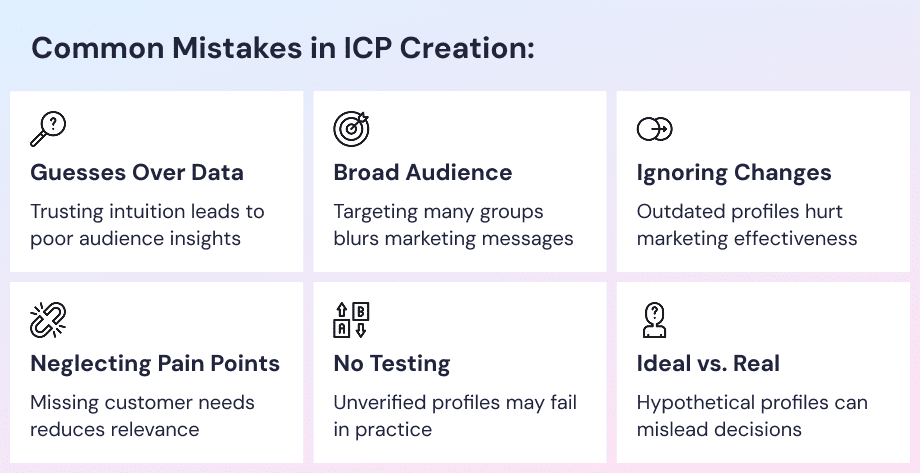
Quick heads up on common pitfalls:
Making your ICP too broad. Everyone is not an ICP. You're better off deeply serving 100 people who love you than kind-of serving 1,000 people who are meh about you.
Confusing ICP with market size. Your ICP is who you're targeting RIGHT NOW. Your total market can be bigger, but that's not what we're talking about here.
Only looking at demographics. Numbers are easy to track, but the psychological stuff how they think, what they value that's what really matters.
Changing direction every week. Give yourself time to gather real data before you pivot. But also don't ignore what the data is telling you.
Set it and forget it. Review your ICP monthly in the early days. Things change fast.
Actually Using Your ICP (This Is Where the Magic Happens)
Having an ICP is pointless if you don't actually use it. Here's how:
Filter ruthlessly. Before you spend an hour on a sales call or a partnership opportunity, ask: Is this a fit for our ICP?
Speak their language. Use your ICP's exact words when you write copy. Address their specific pain points. Make them feel like you built this just for them.
Show up where they are. Don't waste time on channels where your ICP isn't. If your ideal customer doesn't use TikTok, why are you making TikTok videos?
Build for them first. Every feature, every design choice run it through the ICP filter. Does this solve their problem? Great. If not, save it for later.
Use them to attract others like them. When you land ICP-fit customers, get their stories. Use them as case studies. They'll attract more people just like them.
The Real Talk: This Takes Time
Look, I'm not going to tell you that defining your ICP will magically get you 100 users overnight. It won't.
But it will make every single thing you do more effective. Your messaging will resonate more. Your product decisions will be clearer. You'll waste less time on dead-end conversations.
Most importantly, you'll build something that a specific group of people absolutely loves instead of something that lots of people think is just okay.
Your first 100 users aren't just numbers. They're the people who will validate what you're building, give you the insights to make it better, and become your champions as you grow.
Start specific. Stay focused. Listen to what the market tells you. Adjust when you need to.
You've got this.
Need Help Finding Your Ideal Customers?
Defining your ICP is one thing. Actually finding and connecting with those first 100 users? That's where things get real.
If you're struggling to identify who your ideal customer is, or you know who they are but can't figure out how to reach them, we've been there. At Bizowl, we help early-stage startups cut through the noise and connect with the people who actually need what you're building.
Whether you need help refining your ICP, crafting messaging that resonates, or figuring out your go-to-market strategy for those crucial first customers we're here for it.
Ready to stop guessing and start growing? Let's talk about how we can help you land your first 100 users. Get in touch with Bizowl today and let's turn that ICP into actual customers.
Want help applying this to your startup?
Talk to a Bizowl expert for 15 minutes, free. We'll look at where you are and tell you honestly what to do next, whether or not you work with us.