

On this page · 7 sections
- What is Organic GTM? (And Why It Matters in India)
- Why Startups Should Avoid Ads in the Early Stage
- 1. You Haven't Validated Your ICP Yet
- 2. Your Messaging Isn't Clear
- 3. You Have No Content Foundation
- 4. Indian Audiences Don't Trust New Brands Instantly
- The Organic GTM Foundation (Start Here, Not With Tactics)
- a) Who You're Selling To (ICP Clarity)
- b) What Problem You Solve (Value Proposition)
- c) Why You're Different (Positioning)
- d) What Outcome You Promise (Transformation)
- The Core Organic GTM Tactics Every Startup Must Use
- 1. Create High-Trust Content (Your #1 Growth Lever)
- 2. Build a Strong LinkedIn Presence (Founder-Led GTM)
- 3. Turn Your Website into a Conversion Machine
- 4. Build Mini-Communities (Micro-Network GTM)
- 5. Use Customer Development as a GTM Engine
- 6. Leverage Strategic Partnerships
- 7. Create Lead Magnets That Actually Work
- 8. Publish Value on Niche Platforms
- 9. Use Organic PR (No Agencies Needed at Early Stage)
- 10. Build a Referral-Driven Growth Loop
- The Compounding Effect of Organic GTM
- How BizOwl Enables Faster Organic GTM Execution
- Conclusion: Start Small, Build Consistently, Compound Relentlessly
You've just launched your product. The first few customers trickled in through your network. Now you're thinking: Time to scale. Let's run some ads.
Stop right there. You really need to.
Here's what happens next: You spend ₹50,000 on Facebook ads. Get 200 clicks. 10 sign-ups. 1 paying customer. Your CAC just became ₹50,000. And you have no idea if that customer will stick around.
Sound familiar?
The truth is, most early-stage founders feel pressured to run ads too quickly. They see other startups posting about their hockey stick growth and assume paid ads are the answer. But here's what those success stories don't tell you: the founders who scaled profitably built a strong organic foundation first.
In the Indian startup ecosystem of 2025-26, where funding is selective and runway matters more than ever, organic GTM isn't just the smarter path, it's the survival path.
This article breaks down exactly which organic tactics work, why they work, and how to execute them without a massive team or budget. Because when done right, organic GTM compounds. It builds credibility. And it brings you customers who actually stay.
What is Organic GTM? (And Why It Matters in India)
Organic GTM means acquiring customers without paying for their attention. No Google Ads. No Facebook campaigns. No sponsored posts.
Instead, you're earning attention through:
- Content that educates or solves problems
- Relationships built over time
- Trust created through consistency
- Value delivered before asking for anything
How it's different from performance marketing:
Performance marketing is about paying to show your message to the right people. You control reach with rupees. Organic GTM is about earning that reach through relevance and trust. You control impact with value.
Why organic GTM is critical for Indian startups:
First, trust matters more here. Indian buyers whether B2B or B2C don't immediately trust new brands. They want social proof, referrals, and time to evaluate. Organic GTM naturally builds this trust.
Second, budgets are tighter. With funding winter still lingering, every rupee counts. Organic channels have better ROI over time, even if results come slower initially.
Third, the market is diverse What works in Mumbai might not work in Indore. Organic tactics let you test messaging and positioning across segments without blowing your budget.
The key takeaway: Organic GTM is about consistency, credibility, and compounding. Plant seeds today, harvest customers six months from now and keep harvesting for years.
Why Startups Should Avoid Ads in the Early Stage
Let me be clear: ads aren't evil. But running them too early is like trying to scale a broken engine.
Here's why most early-stage startups waste money on ads:
1. You Haven't Validated Your ICP Yet
If you don't know exactly who your ideal customer is, you're shooting in the dark. You might target SMBs in India or millennials interested in finance. That's way too broad. Your ad spend gets distributed across hundreds of people who will never buy.
What happens: High impressions, low conversions, wasted budget.
2. Your Messaging Isn't Clear
You know what your product does. But can you explain the transformation it creates in 10 words? Can your homepage visitor understand the value in 5 seconds?
If not, running ads just sends confused people to a confusing website.
What happens: Traffic comes, traffic leaves, nothing converts.
3. You Have No Content Foundation
Ads drive traffic. But what happens when someone clicks? If they land on your site and see no blog posts, no case studies, no proof that you know what you're talking about they leave.
Organic content is the soil. Ads are the water. You need soil first.
4. Indian Audiences Don't Trust New Brands Instantly
This is a cultural reality. A new brand running ads feels like a salesperson walking up to you at a mall. You instinctively pull back.
But a new brand that's been consistently sharing helpful content on LinkedIn for six months? That's different. You've already built familiarity.
The bottom line: Instead of burning ₹2-5 lakhs experimenting with ads when you don't have product-market fit, use that money to validate your GTM fundamentals first. Nail your positioning. Build your content engine. Create social proof.
Then, when you turn on ads, they'll actually work.
The Organic GTM Foundation (Start Here, Not With Tactics)
Before you write a single blog post or send a single cold message, you need clarity on four things:
a) Who You're Selling To (ICP Clarity)
This isn't small businesses or working professionals.
This is: 25-40 year old marketing managers at B2B SaaS companies in Bangalore and Pune, managing ₹10-30 lakh budgets, struggling to prove ROI on their campaigns, currently using a mix of tools they hate.
That's an ICP you can build content for. That's a person you can imagine while writing.
Exercise: Write down three real people who represent your ICP. What do they worry about at night? What could get them promoted? What's making their job harder right now?
b) What Problem You Solve (Value Proposition)
Not what your product does. What problem it eliminates.
Bad value prop: We're a project management tool with Gantt charts and time tracking.
Good value prop: We help remote teams stop losing work in Slack threads and actually ship projects on time.
See the difference? One is about features. The other is about the outcome.
c) Why You're Different (Positioning)
If you sound exactly like your competitors, why should anyone choose you?
Maybe you're built specifically for Indian compliance requirements. Maybe you're 10x cheaper. Maybe you're the only solution that integrates with Tally. Maybe you focus on one industry vertical.
Find your angle and own it.
d) What Outcome You Promise (Transformation)
People don't buy products. They buy a better version of their future.
Your customer is currently in State A (struggling, frustrated, wasting time). You promise to take them to State B (efficient, confident, successful).
Make that transformation crystal clear.
Why this foundation matters:
Everything else your content, your outreach, your website copy flows from these four elements. Get them wrong, and all your tactics will underperform. Get them right, and everything becomes easier.
Insider tip: You don't have to figure this out alone. The fastest path is to talk to 20-30 potential customers and really listen. What words do they use to describe their problem? What would make them switch from their current solution? Those conversations give you everything you need.
And if you're wondering how to structure these conversations or need help synthesizing the insights, that's exactly where working with a GTM consultant helps. Platforms like BizOwl give you access to vetted GTM specialists who can help you build this foundation in weeks instead of months.
The Core Organic GTM Tactics Every Startup Must Use
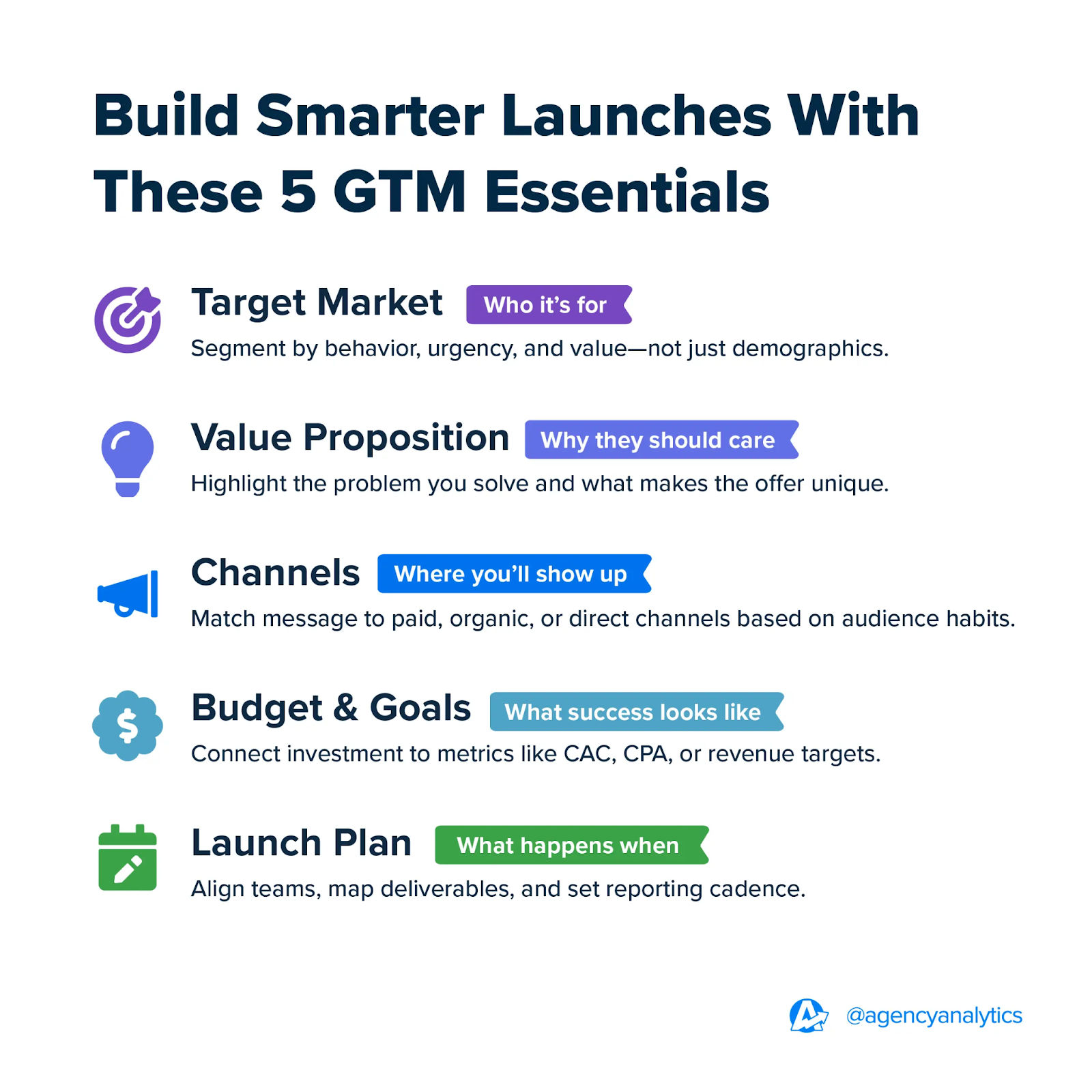
Now we get to the good stuff. These are the tactics that actually drive results when executed consistently.
1. Create High-Trust Content (Your #1 Growth Lever)
Content marketing isn't about writing blog posts to improve SEO. It's about becoming the most helpful voice in your space.
What high-trust content looks like:
Educational blog posts that solve specific problems. Example: If you're building accounting software for restaurants, write How to Handle GST on Food Delivery Aggregator Commissions. That's a real pain point. Address it comprehensively.
Case studies with real numbers. Don't say we helped them grow. Say we helped Paper Boat reduce inventory stockouts by 34% in 90 days. Specificity builds trust.
Founder insights and learnings. Write about what you're discovering as you build. Here's why we shut down our freemium model after 6 months is more interesting than generic advice.
Screenshots of customer conversations. Blur out names if needed, but show real conversations. Show the problems people are bringing to you. This validates that your solution matters.
Original frameworks. Create a way of thinking about the problem. Give it a name. Make it simple. Now you own that concept in your space.
Practical playbooks. The 30-Day Onboarding Playbook for SaaS Startups isn't just content it's a lead magnet that pre-qualifies prospects.
Why this works:
When someone searches for a solution to their problem and finds your comprehensive answer, you've just become an expert in their mind. When they're ready to buy, they'll remember you first.
Execution reality check:
Creating great content takes time. Most founders try for two weeks, see no immediate results, and quit. That's the mistake.
The secret is consistency over 6-12 months. One great article per week builds a library of 50+ pieces in a year. That's when organic traffic compounds.
How to accelerate this: Instead of struggling with writer's block, work with content specialists who understand your space. BizOwl has vetted content writers, designers, and SEO experts who help startups produce high-quality content consistently without the overhead of hiring full-time.
2. Build a Strong LinkedIn Presence (Founder-Led GTM)
Your founder's LinkedIn profile is your startup's most powerful distribution channel. Period.
Here's why: People buy from people, not from companies. When your founder shares authentic insights, learnings, and even failures, it humanizes your brand.
What founder-led LinkedIn looks like:
Post 3-4 times per week. Share what you're learning about your customers, your product, your market. Keep it real. No corporate speak.
Engage with your early users. When someone comments, respond. When someone in your space shares something interesting, add your perspective. You're building relationships, not just broadcasting.
Share behind-the-scenes moments. Launching a new feature? Share the 3 AM debugging session. Lost a big deal? Share what you learned. This vulnerability builds connection.
Position yourself as a solver, not a seller. 80% of your content should be helpful insights with zero pitch. 20% can mention your product when relevant.
Real example:
A founder building an HR tech product posted about how Indian startups were getting compliance notices for WFH allowances during tax season. He broke down the issue, explained the rules, and shared a simple framework. That one post got 50,000 views and 200 comments. 15 qualified leads reached out. Three became customers.
Cost? Zero rupees. Just 30 minutes to write the post.
The compounding effect:
After 6 months of consistent posting, your founder's network grows. Your posts start showing up in more feeds. You become that person who knows about [your space].
Now when someone needs a solution you provide, they think of you first.
Common mistake:
Trying to make every post perfect. Overthinking the caption. Waiting for the right time.
Reality: Your audience wants authentic insights more than polished perfection. Hit publish. Learn from what resonates. Iterate.
Getting help: If your founder is too busy or uncomfortable with content creation, bring in someone to help with strategy, ghostwriting, and design. BizOwl connects founders with content specialists who can manage LinkedIn posting, ensure consistency, and maintain the founder's authentic voice.
3. Turn Your Website into a Conversion Machine
Your website isn't just a digital brochure. It's your 24/7 salesperson.
Most startup websites fail because they're built for the founder, not the customer. They talk about features, not outcomes. They're cluttered with information but don't guide visitors toward action.
What a conversion-focused website needs:
Clear messaging in the first 5 seconds. Your hero section should answer: Who is this for? What problem does it solve? What do I do next?
Example:
- Bad: Revolutionizing business operations with AI-powered insights
- Good: Help your finance team close books 10 days faster without hiring more people
Simple value proposition. One sentence that explains the transformation you deliver.
Trust-building sections:
- Customer logos (even if it's just 3-4)
- Testimonials with names and photos
- Case studies or results
- As seen in media mentions if you have them
Social proof throughout. Don't just dump testimonials at the bottom. Weave them into each section. Don't take our word for it here's what Rajesh from Paper & Pen says...
Easy, obvious CTAs. Start free trial, Book a demo, Download playbook whatever makes sense. Make the button big. Make it clear.
Remove friction: If someone has to fill out 12 fields to try your product, you're killing conversions. Ask for minimum information upfront.
Common mistakes:
Trying to explain everything on the homepage. Result: cognitive overload, visitor leaves.
Using jargon or buzzwords that sound impressive but mean nothing to your customer.
Hiding your pricing because you're worried about competitors seeing it. (News flash: they'll find out anyway. And transparency builds trust.)
The test: Show your homepage to someone outside your industry for 5 seconds. Then ask: What does this company do? Who is it for? What should I do next?
If they can't answer clearly, you need to simplify.
Getting this right: Most founders aren't designers or copywriters. That's fine. Work with professionals who specialize in conversion-focused websites for startups. BizOwl partners can create landing pages, write compelling copy, refine your branding, and improve UX all without the long timeline or high cost of traditional agencies.
4. Build Mini-Communities (Micro-Network GTM)
Communities aren't just for B2C companies. Some of the best B2B growth happens through small, engaged communities.
Why communities work:
You get direct access to your ICP. You can test messaging, get feedback, and understand pain points in real-time. When you launch something new, you have an audience ready to try it.
Where to build:
WhatsApp groups (best for India high engagement, easy to manage with 50-200 people)
LinkedIn groups (good for professional topics, though engagement can be lower)
Telegram or Discord (works for tech-savvy audiences)
The strategy:
Don't start by pitching your product. Start by gathering people around a shared problem or interest.
Example: If you're building a tool for content marketers, create a WhatsApp group called Content Marketing India - Tactics & Learnings. Invite 50 marketers. Share weekly tips, host discussions, let members help each other.
After a few months, you've built trust and authority. Now when you mention your product, people are receptive.
What to share in your community:
- Weekly insights or tips
- Case studies and examples
- Ask for feedback on new ideas
- Highlight member wins
- Host occasional AMAs (Ask Me Anything)
The golden rule: Give 90%, ask for 10%. Your community should feel valuable even if people never buy from you.
Execution tip: Managing a community takes time. If your founder is already stretched thin, bring in a community manager or strategist who can set it up properly and keep engagement high. BizOwl has specialists who help startups launch and manage micro-communities that actually drive business outcomes.
5. Use Customer Development as a GTM Engine
Here's a framework most founders miss: Every customer conversation isn't just product research. It's GTM intelligence.
The process:
Talk to potential users every week. Not just would you use this? conversations. Deep dives into:
- How they currently solve the problem
- What they've tried before
- Why those solutions failed
- What would make them switch
- Who else is involved in the decision
Capture everything:
- Exact phrases they use to describe their pain
- Specific objections they raise
- Emotional triggers (frustration, fear, aspiration)
- Buying signals and blockers
Then turn this into content:
That objection you heard five times? Write a blog post addressing it.
That phrase they all use? That's your headline.
That workaround they all do? That's your case study showing a better way.
Real example:
A founder building a tool for CA firms kept hearing: We lose so much time just organizing client documents. That exact phrase became their homepage headline. Conversion rate went up by 40%.
They also wrote a blog post: Why CA Firms Waste 15 Hours Per Week on Document Management (And How to Fix It). That post brought in 50 qualified leads in three months.
Cost? Zero. Just listening and synthesizing.
Why this is powerful:
You're not guessing what resonates. You're using the exact language your customers use. And you're addressing real objections before they even reach your website.
Making this systematic: Run structured customer interviews, not just casual chats. Have a script. Record insights properly. If you need help designing interview frameworks or synthesizing learnings, BizOwl's research and GTM partners can help you build a repeatable system.
6. Leverage Strategic Partnerships
You don't have to build everything alone. Find complementary startups and grow together.
Types of partnerships:
Co-marketing: Partner with a startup that serves the same ICP but offers a different solution. Example: You build invoicing software, they build inventory management. Co-host a webinar on Running an Efficient Retail Business.
Content collaboration: Co-write blog posts, case studies, or playbooks. You both get exposure to each other's audiences.
Product bundling: Offer special deals when customers use both products. This adds value and creates win-win scenarios.
Referral arrangements: Simple setup you send them customers, they send you customers. Track and reward based on conversions.
Why this works:
Your partner already has trust with an audience you want to reach. By collaborating, you borrow that trust. It's organic distribution.
Finding the right partners:
Look for:
- Similar ICP but different solution
- Aligned values and quality standards
- Founders you genuinely like working with
- Comparable growth stage (avoids mismatched expectations)
Execution tip: Finding and vetting the right partners takes time. BizOwl's startup network makes it easier to discover relevant partners who are already vetted and open to collaboration.
7. Create Lead Magnets That Actually Work
A lead magnet is valuable content you give away in exchange for someone's email or contact info.
Why they work:
They help you capture leads who aren't ready to buy yet. Someone might not need your product today, but if they download your playbook, you can nurture them over time.
What makes a good lead magnet:
Specific and actionable. The Complete Guide to Everything doesn't work. 30-Day SaaS Onboarding Checklist does.
Solves one clear problem. Focus beats breadth.
Quick to consume. People want value fast. A 50-page PDF that takes hours to read will just sit in their downloads folder.
Examples that work:
- Playbooks (step-by-step guides)
- Templates (Google Sheets, Notion, slides)
- Checklists (actionable items)
- Starter kits (curated resources)
- Calculators or tools (ROI calculator, pricing calculator)
Distribution:
Put lead magnets on your blog posts, link to them from LinkedIn, mention them in conversations.
Don't gate everything make some content freely available to build trust first.
Common mistake:
Creating a lead magnet and expecting magic. You need to promote it consistently for months before it starts generating significant leads.
Getting this done: Designing beautiful, professional lead magnets takes skill. If you don't have a designer or content specialist in-house, work with freelancers who specialize in this. BizOwl connects you with designers and content specialists who can build lead magnets in days, not weeks.
8. Publish Value on Niche Platforms
Don't just focus on your own channels. Show up where your audience already hangs out.
Platforms that work for Indian startups:
Product Hunt: Launch your product here. Even if you don't win Product of the Day, you'll get feedback, early users, and backlinks.
Reddit: Find relevant subreddits (r/SaaS, r/entrepreneur, r/startups, r/india). Share insights genuinely don't just drop links.
Indie Hackers: Great for B2B SaaS founders. Share your journey, metrics, learnings.
Startup India ecosystem: Engage in forums, webinars, and community discussions.
Industry newsletters: Pitch your insights to newsletter owners in your space. Many are looking for good content.
LinkedIn Groups: Find active groups where your ICP participates. Share value, don't spam.
The strategy:
Adapt your content for each platform. What works on LinkedIn might not work on Reddit. Reddit loves authenticity and detail. Product Hunt loves visuals and clear value props.
Always lead with value. Answer questions, share insights, help others. Mention your product only when relevant.
Why this works:
You're borrowing the audience and trust these platforms already have. And you're reaching people who are actively looking for solutions.
Making launches effective: Preparing launch assets, crafting platform-specific messaging, and coordinating across channels takes work. BizOwl experts can help you prepare everything you need to launch successfully on these platforms.
9. Use Organic PR (No Agencies Needed at Early Stage)
You don't need a ₹5 lakh/month PR agency to get press coverage. Organic PR works for early-stage startups.
What organic PR looks like:
Expert quotes: Journalists need sources for their stories. Position yourself as an expert in your space. Use platforms like HARO (Help A Reporter Out) or SourceBottle to respond to media queries.
Founder stories: Local media, startup publications, and industry blogs love featuring founder journeys. Pitch your story what problem you're solving, why it matters, what you've learned.
Data-backed insights: Conduct a small survey with your users or analyze data from your product. Publish findings. Example: We analyzed 500 Indian SMBs and found 73% are still manually tracking inventory. Media loves data.
Small announcements: Raised funding? Hit a milestone? Launched in a new city? These are all PR opportunities.
Thought leadership: Write guest posts for industry publications. Share contrarian or interesting takes on LinkedIn that publications might want to feature.
How to pitch:
Keep emails short. Lead with value for their audience, not why your startup is cool.
Subject line: Data: 73% of Indian SMBs manually track inventory
Body: Hi [Name], I run [Company] and recently surveyed 500 SMBs about their operations. Found some surprising data about inventory management that I think your readers would find valuable. Would you be interested in a 600-word piece on this?
Why this works:
Media coverage builds credibility. A single article in YourStory, Economic Times, or a niche publication validates you in ways paid ads never can.
Getting help: If you need support crafting pitches, identifying media opportunities, or preparing thought leadership content, PR consultants on BizOwl provide startup-friendly support without the agency overhead.
10. Build a Referral-Driven Growth Loop
Your early customers are your best marketers. Make it easy for them to spread the word.
How to build referral loops:
Reward early users: Give them credits, discounts, or cash incentives for every referral that converts. Make the reward meaningful ₹500 won't move the needle, but ₹5,000 might.
Make sharing easy: Don't make users work hard. Give them a unique referral link. Pre-write the message they can share. The easier you make it, the more they'll do it.
Create micro-incentives: Small wins matter. Refer 3 friends, get a free month. Keep goals achievable.
Track and celebrate: Publicly thank users who refer others (with their permission). Gamification works show leaderboards, create tiers (Bronze, Silver, Gold referrers).
Why this works:
Referrals have the highest conversion rate and lowest CAC. Someone referred by a happy customer comes pre-sold. They already trust you because someone they trust vouched for you.
Common mistakes:
Making the referral program too complicated. If users need to read a 3-page document to understand how it works, it won't work.
Offering rewards that aren't meaningful. Be generous a great referral program pays for itself many times over.
Designing this well: Building an effective referral program isn't just about offering rewards. It's about psychology, UX, and messaging. BizOwl product strategy partners can help you design lightweight referral loops that actually drive growth.
The Compounding Effect of Organic GTM
Here's the truth about organic GTM: it's slow at first. Painfully slow.
You write 10 blog posts. Barely anyone reads them. You post on LinkedIn for a month. Crickets. You reach out to 50 potential customers. 3 respond.
This is where most founders quit. They think, This isn't working.
But here's what they don't see: the compounding.
Month 1-3: You're planting seeds. Creating content, building your presence, having conversations. Results are minimal.
Month 4-6: Some seeds sprout. Your LinkedIn posts start getting traction. A blog post ranks. A few leads come in organically.
Month 7-12: Momentum builds. Your content library is substantial. Your LinkedIn network is engaged. People start finding you without you reaching out.
Month 13+: Compounding kicks in. Old blog posts still bring in leads. People who discovered you months ago are now ready to buy. Your founder has become a trusted voice.
The math:
If you publish 2 blog posts per week, in 6 months you have 50 posts. If each post gets 100 views per month, that's 5,000 organic visits monthly. At a 2% conversion rate, that's 100 leads per month without spending a rupee on ads.
Now add LinkedIn posts, partnerships, communities, and referrals. The leads compound.
The analogy:
Paid ads are like renting an audience. You stop paying, traffic stops.
Organic GTM is like building an asset. Every piece of content, every relationship, every community member is an asset that keeps delivering value.
The patience required:
This is the hard part. In a world of instant gratification, organic GTM requires faith and consistency.
But here's the reward: Once it compounds, it's incredibly hard to stop. Your competitors can copy your features, but they can't copy the trust and authority you've built over 18 months.
How BizOwl Enables Faster Organic GTM Execution
There's one big challenge with organic GTM: execution.
Founders know they should create content. They know they should build communities. They know they should optimize their website.
But they're also:
- Building the product
- Talking to customers
- Managing the team
- Handling operations
- Fundraising
There aren't enough hours in the day.
This is where having the right execution partners changes everything.
What BizOwl does:
BizOwl is a platform that connects early-stage founders with vetted specialists across every GTM function content writers, designers, SEO experts, community managers, GTM consultants, website developers, and more.
Why it matters:
Vetted partners: Every specialist is pre-screened. You're not sifting through hundreds of profiles hoping to find someone good.
Faster execution: Instead of spending weeks hiring (and potentially making wrong hires), you can get started in days.
Affordable pricing: Startups get access to high-quality specialists at founder-friendly rates. No agency markups.
GST-compliant payouts: All billing is handled properly, saving you compliance headaches.
Specialists for every GTM task: Whether you need someone to write 4 blog posts per month, design lead magnets, optimize your website, or build a LinkedIn strategy there's someone who specializes in exactly that.
No wrong hiring: You're not committing to full-time hires when you're still figuring things out. Scale up or down as needed.
Founder-friendly support: The platform is built by people who understand startups. You get support that actually helps.
How it works:
You post what you need (e.g., Need a content writer who understands B2B SaaS to write 2 blog posts per week ). Vetted specialists respond. You choose who to work with. They deliver. You pay through the platform.
Simple. Fast. Effective.
The impact:
Instead of organic GTM taking 18 months to compound, it takes 12 months because you're executing faster and better.
Instead of trying to do everything yourself and burning out, you focus on what only you can do (product, strategy, customer relationships) while specialists handle execution.
When to use BizOwl:
When you know organic GTM is the right path but don't have the bandwidth or expertise to execute well.
When you need specific help (content, design, website, community, SEO) without hiring full-time.
When you want to move fast without compromising quality.
Conclusion: Start Small, Build Consistently, Compound Relentlessly
If you take away one thing from this article, let it be this: organic GTM works. But only if you commit to it for long enough.
You don't need to do all 10 tactics immediately. Start with 2-3:
- Build your content foundation (blog posts, case studies)
- Show up consistently on LinkedIn (founder-led growth)
- Turn your website into a conversion machine
Do those well for 6 months. Then layer in communities, partnerships, and lead magnets.
The goal isn't perfection. The goal is progress. Publish that imperfect blog post. Post that LinkedIn update even if it feels awkward. Launch that lead magnet even if it's not perfect.
Remember:
Being early-stage is actually the perfect time to start organic GTM. You have fewer customers to serve, so you have time to build. You're still figuring out messaging, so customer conversations teach you everything.
And most importantly: organic GTM compounds. Every post, every relationship, every piece of content you create today will keep delivering value 12, 18, 24 months from now.
Your next steps:
- Clarify your ICP, value prop, positioning, and transformation promise (the foundation)
- Choose 2-3 organic tactics to start with
- Commit to 6 months of consistency
- Track what works, double down on it
And whenever you're ready to execute organic GTM with speed and clarity, remember: you don't have to figure it all out alone. Bizowl gives you access to vetted specialists across every GTM function all in one place.
The founders who win aren't the ones with the biggest budgets. They're the ones who build trust, deliver value, and compound relentlessly.
Start today. Your future customers are already out there searching for solutions. Make sure they find you.
Want help applying this to your startup?
Talk to a Bizowl expert for 15 minutes, free. We'll look at where you are and tell you honestly what to do next, whether or not you work with us.


